Best Flooring for High-Traffic Areas (Living Rooms, Hallways & Stairs)
Floor installation is a time-consuming, expensive project, and you definitely don’t want to end up replacing it every few years. You might need especially sturdy flooring if you have kids or pets. But even if you live alone, you obviously wouldn’t want to deal with frequent dings and scratches on your floors from normal wear and tear.
Table of Contents
So, here are 8 of the best flooring materials for high-traffic areas to suit your lifestyle.
Bamboo
Credit: The Spruce
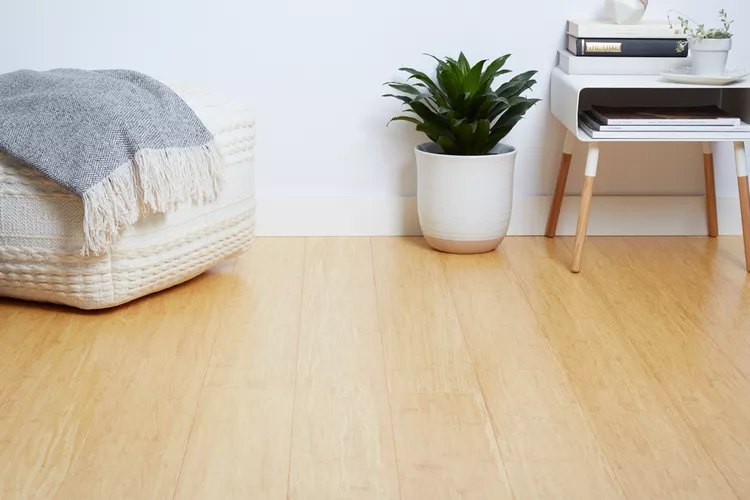
Bamboo is a form of grass. While it can be extremely difficult to remove from your yard, it becomes surprisingly attractive and effective when transformed into flooring. The secret to bamboo flooring’s incredible durability lies in three elements: adhesives, stalk placement, and quality of bamboo.
Off-the-shelf bamboo flooring is usually made by laying bamboo stalks in a cross-direction. Strand bamboo flooring, also called woven strand bamboo flooring, is named for good reason: bamboo stalk strands are pulled apart and integrated more tightly with adhesives. The factor that truly makes the bamboo floor hard is the adhesive. More adhesives = tougher bamboo floor.
Unfortunately, the quality of bamboo is difficult (if not entirely impossible) to determine when choosing bamboo floors. Good-quality bamboo that is harvested at the right time will be much more durable than bamboo that’s rushed to harvest (or harvested too late).
Natural Stone
Credit: Digs Digs
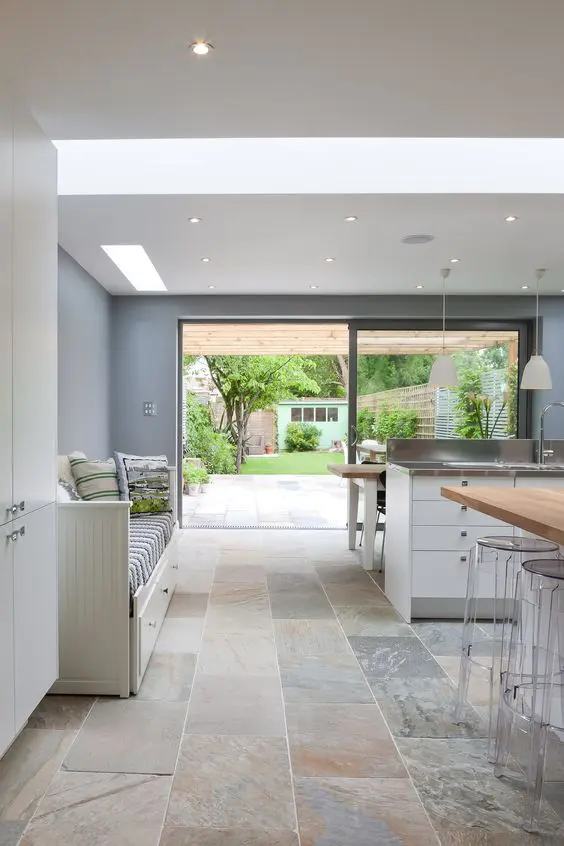
Natural stone is a highly durable flooring. After all, the material has lasted thousands of years in nature. This alone should be a vote of confidence in the ability of natural stone to withstand anything that comes its way.
Travertine and other natural floors compete with concrete for durability. However, some stones, like marble, can appear worn sooner than you might think, especially if they’re installed in a high-traffic area.
Engineered Wood
Credit: The Spruce
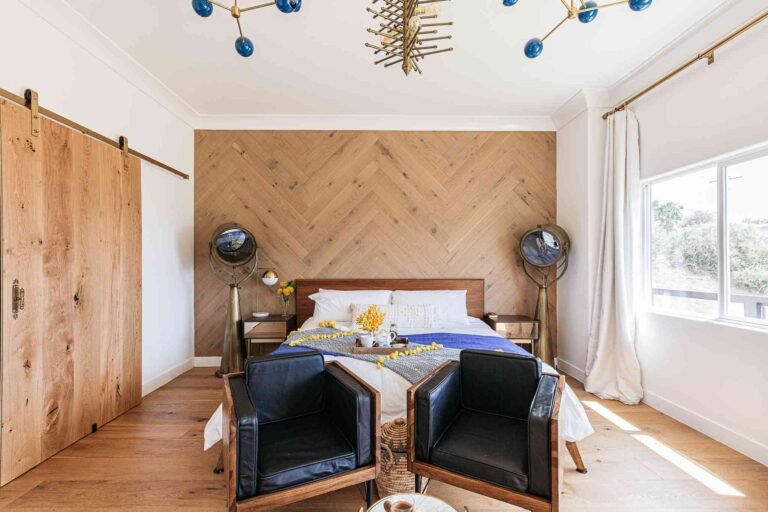
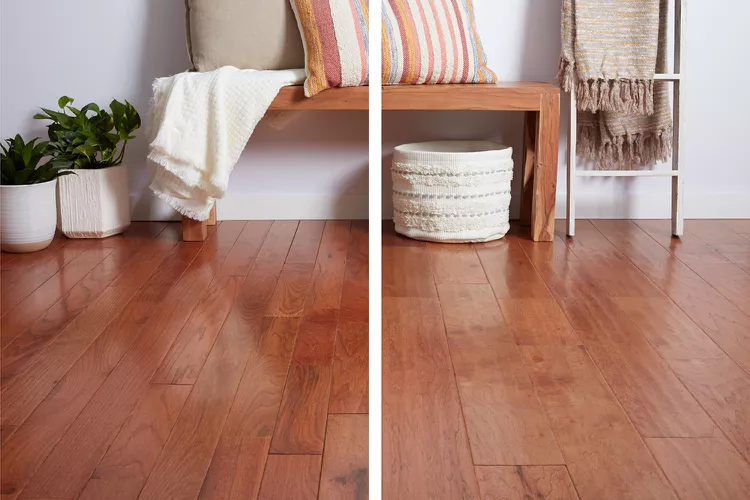
Engineered wood flooring looks perfect as long as its veneer top lasts. To help the material last longer, use plenty of area rugs, throw rugs, and runners. Reconsider using this flooring if you’re a parent to large-clawed pets, or take extra precautions in the key areas where the pets spend most of their time.
Solid Hardwood
Credit: Lumber Liquidators
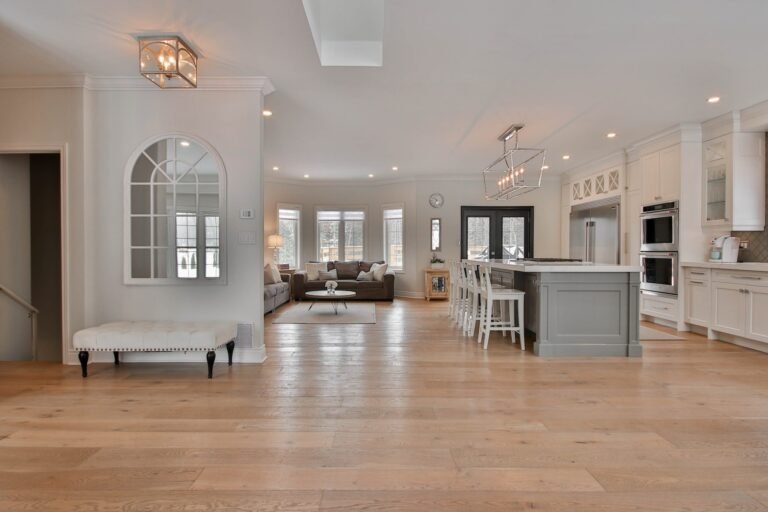
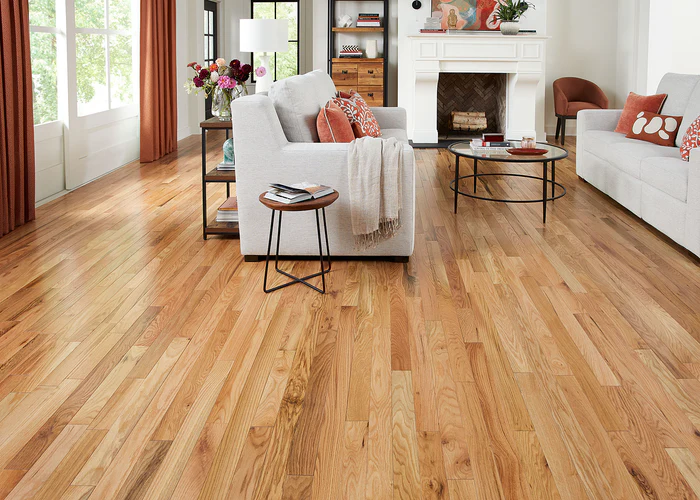
Solid hardwood is one of the longest-lasting floors, largely because it can be restored to a flawless condition. Hardwood, no matter how hard, will scratch, but are the gouges and scratches part of solid hardwood’s natural beauty and character? It depends entirely on the eye of the beholder.
However, should the flooring get scratched, it can be deeply sanded using a drum sander. After a couple of passes with a drum sander, almost all solid hardwood floors can be brought back to their original excellent condition. Then, they can be stained + sealed again to look new.
Concrete
Credit: House Beautiful
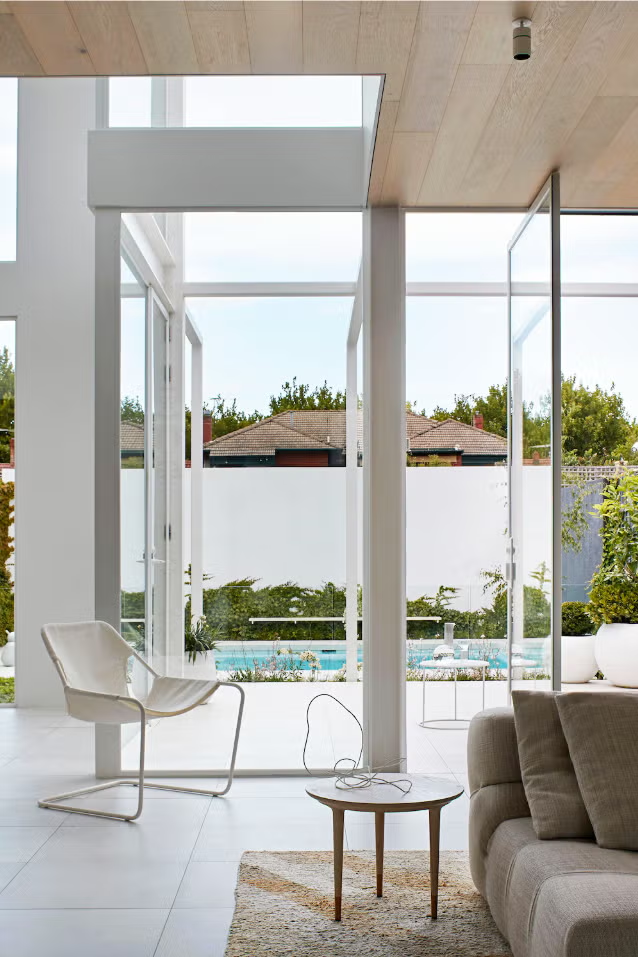
Concrete offers a uniform surface for both commercial and residential use. The reason? Amazing durability. Concrete is the most sturdy indoor flooring. Though it might not work in all areas of your home, it can be a worthwhile addition in rooms that benefit from scratch- and moisture-resistant flooring.
Concrete floors are usually stained to order and can look quite stunning. However, comfort can be lacking. Unless proper heating is installed, the floors will feel cold, and unless mats and area rugs are introduced, it will always feel hard underfoot. Plus, unless those soft floor coverings are laid on a significant portion of the room, there will be annoying sound reverberation.
If you’re considering a concrete floor, this Concrete Slab Material Calculator can help you estimate how much concrete you’ll need before you price out the project.
Ceramic and Porcelain
Credit: Flooring America
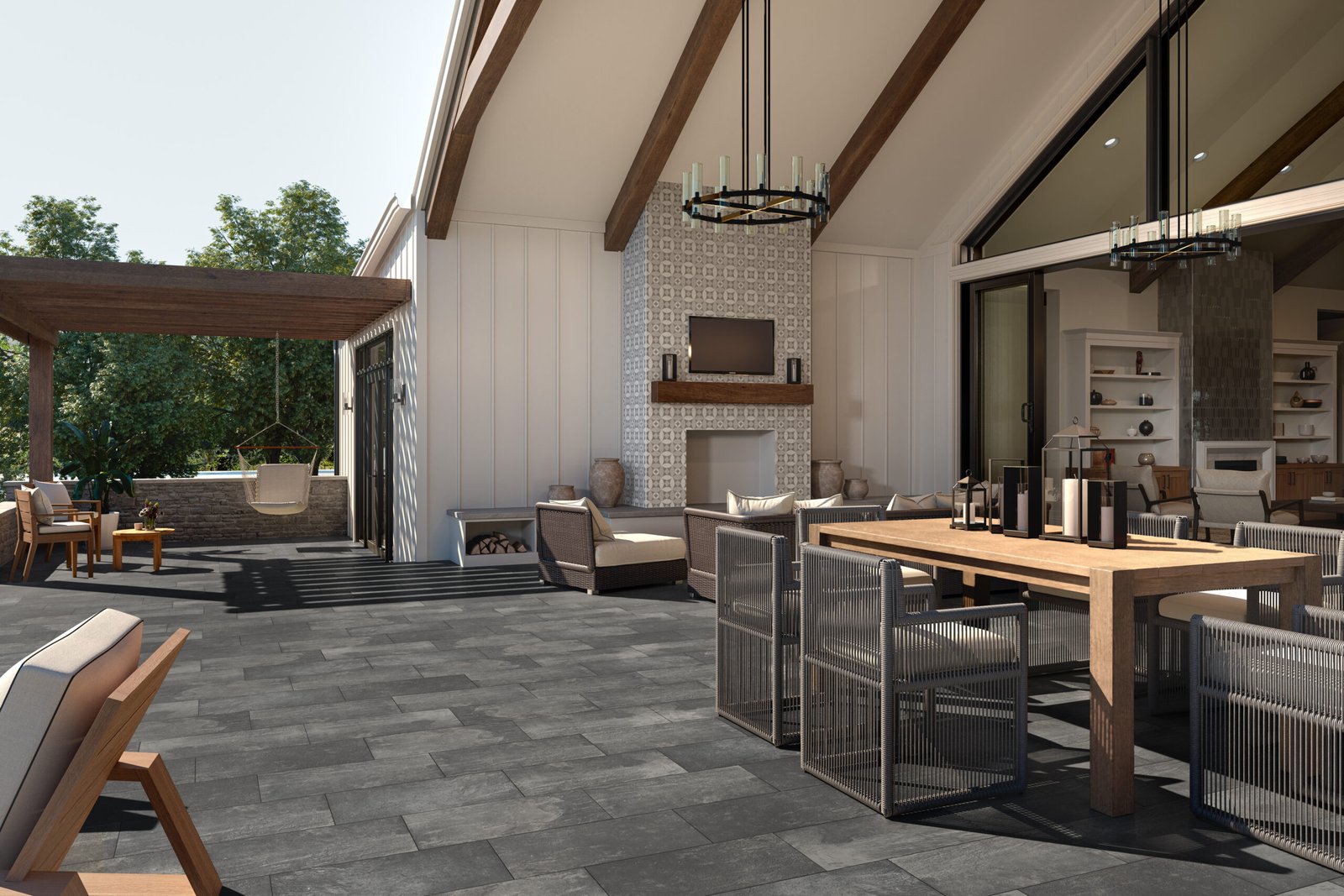
Durable in a few ways, but categorically not in others, porcelain and ceramic tile win over their counterparts largely because of their appearance. Tile is super resistant to spills and scratches. But drop something heavy, and it will definitely crack. Still, tile looks lovely and offers plenty of design options. So many homeowners happily take the risk of the occasionally dropped item; one cracked tile can be easily replaced without tearing up the rest of the flooring.
Expert installation also contributes to the durability. Poor placement or voids under the tiles can cause cracking. Improper grout tiling and a lack of underlayment will allow moisture to accumulate beneath the tiles, swelling the subfloor and causing movement that cracks the tiles.
Tip- Before you buy tile, use our Tile Calculator Layout Planner to estimate how many tiles you need and plan your layout to reduce waste and awkward cuts.
Laminate
Credit: Flooring America
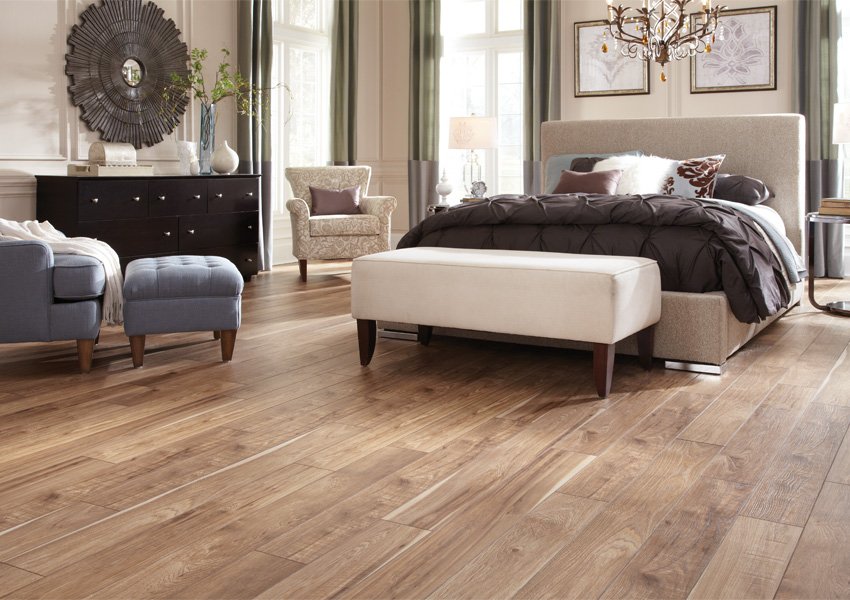
Undoubtedly, the best flooring for high-traffic areas.
Laminate is becoming increasingly durable as manufacturers enhance its wear-and-layer base. That top layer (the transparent wear layer) can be super resistant to damage caused by dog claws and furniture. Abrasion Class (AC) ratings indicate how durable a laminate floor is. Ranging from AC1 (moderate) to AC5 (sturdy), these ratings (usually found in the specs section of a product description) let you know how well the chosen laminate holds up against traffic.
Despite laminate’s high abrasion resistance, the moment there’s a leak in the dishwasher, a big portion of your kitchen floor might suffer. For humid environments, it is possible to go for waterproof laminate flooring. However, since waterproof laminate contains no real wood, it blurs the boundary between traditional laminate and resilient flooring. So if durability is a priority, and you’re debating between vinyl and laminate, go with vinyl.
Resilient Flooring/Vinyl
Credit: The Spruce
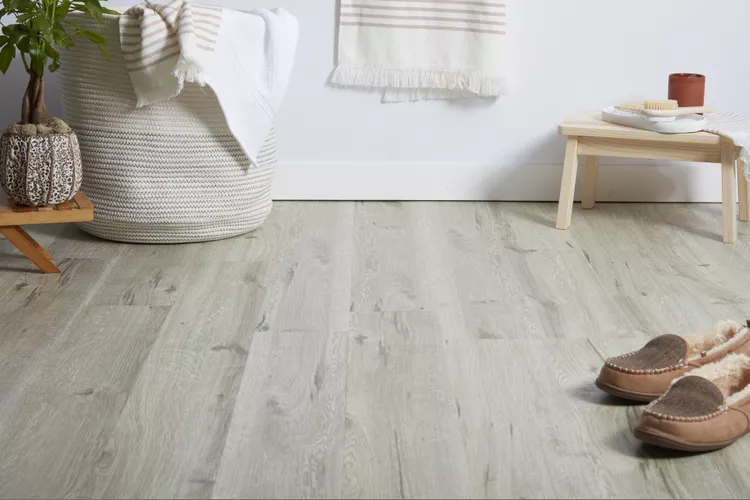
While resilient flooring may just be a label invented by companies to help sell their products, the term is actually a perfect description of this type of flooring. Also called vinyl flooring, this classic flooring material is 100% moisture-resistant and fully laboratory-engineered to ensure a long lifespan.
Sheet vinyl is the best option if pure resilience is a priority. In a small space, you can often get away with a single seam, or even a seamless look if the room is compact enough, and because seams are a primary factor that contributes to flooring deterioration, the minimization of seams becomes an important point. Tile resilient and plank resilient flooring run a close second in terms of sturdiness due to the greater number of seams.
Many styles are made to resemble other flooring materials, so if you want a tough, rental-friendly option that’s easy to install, looks great, and stays budget-friendly, resilient flooring is a smart pick. It can, in fact, be considered the best flooring for high-traffic areas.