Common Lighting Mistakes That Make Rooms Look Smaller
Among all the common design blunders people tend to make when decorating their home, experts say there’s one element that usually tops the list: lighting. It makes sense, considering how tricky it is to get right. There’s no shortage of lighting ideas out there, and every room calls for something a little different.
Table of Contents
The first rule is: don’t stress. We’ve checked in with professionals to put together the top home lighting mistakes to avoid at all costs. Just keep them in mind, and you’re good to go.
The Invisible Shrinker: Wrong Lighting

Light is one of those things that is only noticed when it’s wrong. You don’t walk into a room and instantly say, “Wow, the lumens here are great.” Rather, you feel it in the way your eyes don’t have to work hard, your shoulders untighten, and how the space seems to open up. Or, as seen in so many listings, the opposite. A room that’s absolutely perfect on the floor plan can be low, cramped, and way too gloomy in person, just because of how it’s illuminated.
Light, in fact, has the power to edit the square footage of your home, without changing a single wall, and that is exactly why getting it right is everything.
❌ Installing a Single Overhead Fixture
Relying on a single overhead fixture to do everything is the number one mistake that most people make. A single bulb, a single direction, a single harsh, lonely splash of light in the center of the room. It’s basically like lighting up your face with a flashlight under the chin 😆 Technically, you can see, but nothing actually looks quite right.
Visitors feel this flattening almost instantly. Overhead-only lighting casts pools of brightness surrounded by dark pockets of shadow. The edges of the room sink away, which means the perceived boundary of the space will now shrink to wherever the light happens to fall. For example, in a bedroom, that could mean the bed area feels like a small island, while in a living room, the seating area may look super clustered.
Though you might think you’re keeping things “simple” (one fixture, no clutter), simplicity in lighting is never about fewer lights; it’s about intentional layers. A room that feels open almost always has three types of lighting working together: ambient, task, and accent.
Tip- If you’re unsure how many light sources your room actually needs, our Recessed Lighting Calculator Tool can help you map out layers without overdoing it.
❌ Failing to Layer Lighting
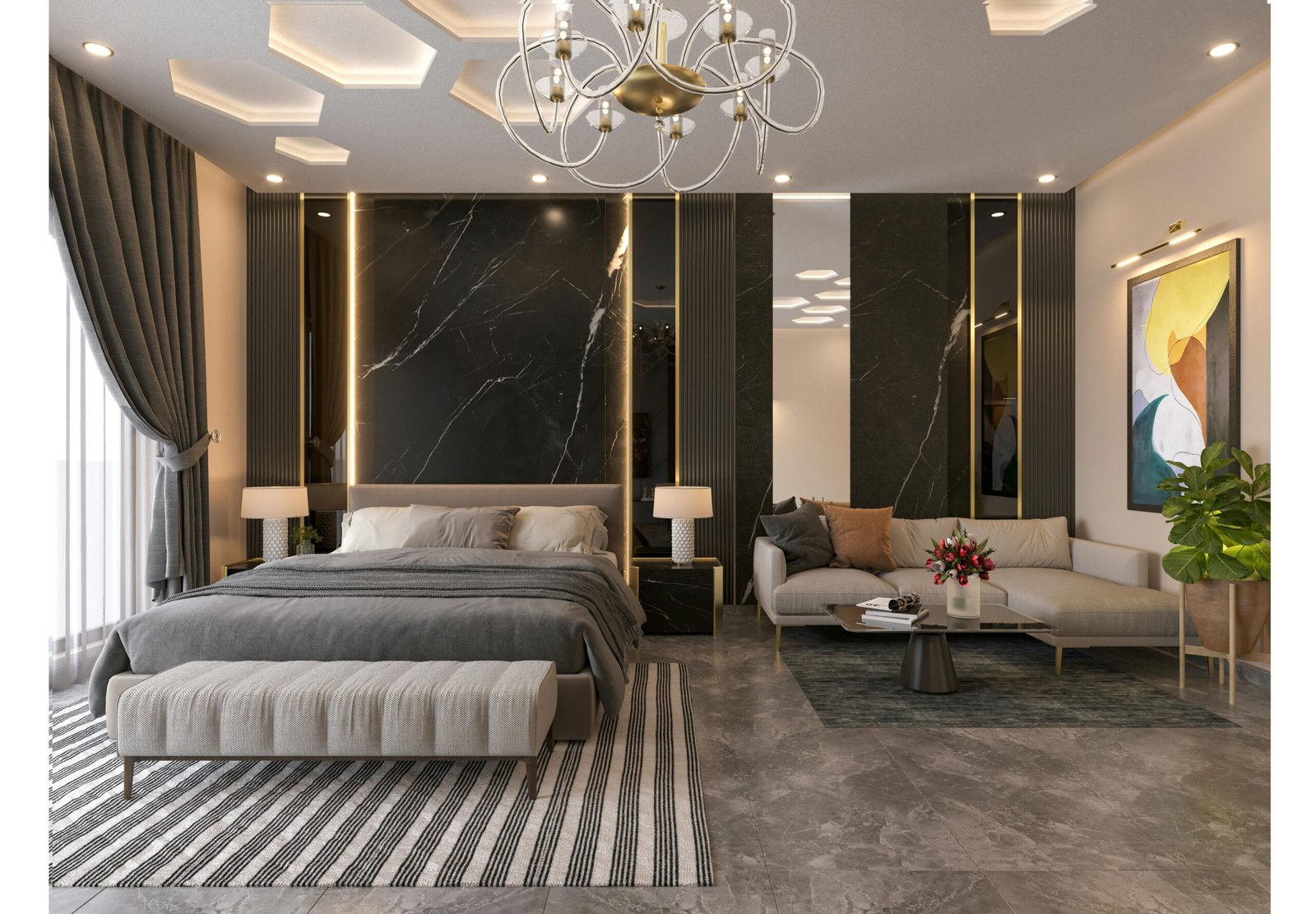
Closely tied to the idea of installing a single overhead fixture is the failure to layer lighting, meaning you’re asking one light source to handle every job in the room. Lighting isn’t meant to be a one-act show. Each type serves a purpose, and when one is missing, the entire space feels off.
Proper layering includes…
- Ambient light- Creates overall brightness
- Task light- Supports activities like cooking or reading
- Accent light- Highlights architectural features
❌ Disregarding Proportions
Scale is key in every room, yet it’s still one of the most overlooked design principles. Proportion is all about visual harmony. The fixture should feel well-placed within the ceiling height, room scale, or table size. Too tiny can feel like an afterthought. Oversized can be too oppressive.
❌ Picking the Wrong Color Temperature for Bulbs
Color temperature is a super sneaky light mistake, one that needs more attention than others. Visitors don’t know the numbers, but the eyes always do.
Light is measured on a Kelvin scale. Lower numbers (2700K) are golden and warm; higher numbers (5000K) are bluer and cooler. Mix them haphazardly together, and every room feels off. Cold light in a bedroom, for example, can make it appear super clinical, and somehow much smaller because no softness invites the eye to roam & relax.
Then, there’s brightness itself. Bulbs can sometimes be dim enough to feel like a power outage, or, worse, so bright that they wash every nuance and shadow. Both extremes make a room less usable, and a room that feels less usable will also look smaller.
Color rendering is another silent thief. Opt for bulbs with poor color rendering, and your beautiful wood, paint, and textiles become muddy. Edges soften in the wrong way; surfaces blur together. That visual mush then compresses the space.
❌ Forgetting that Height is also Space
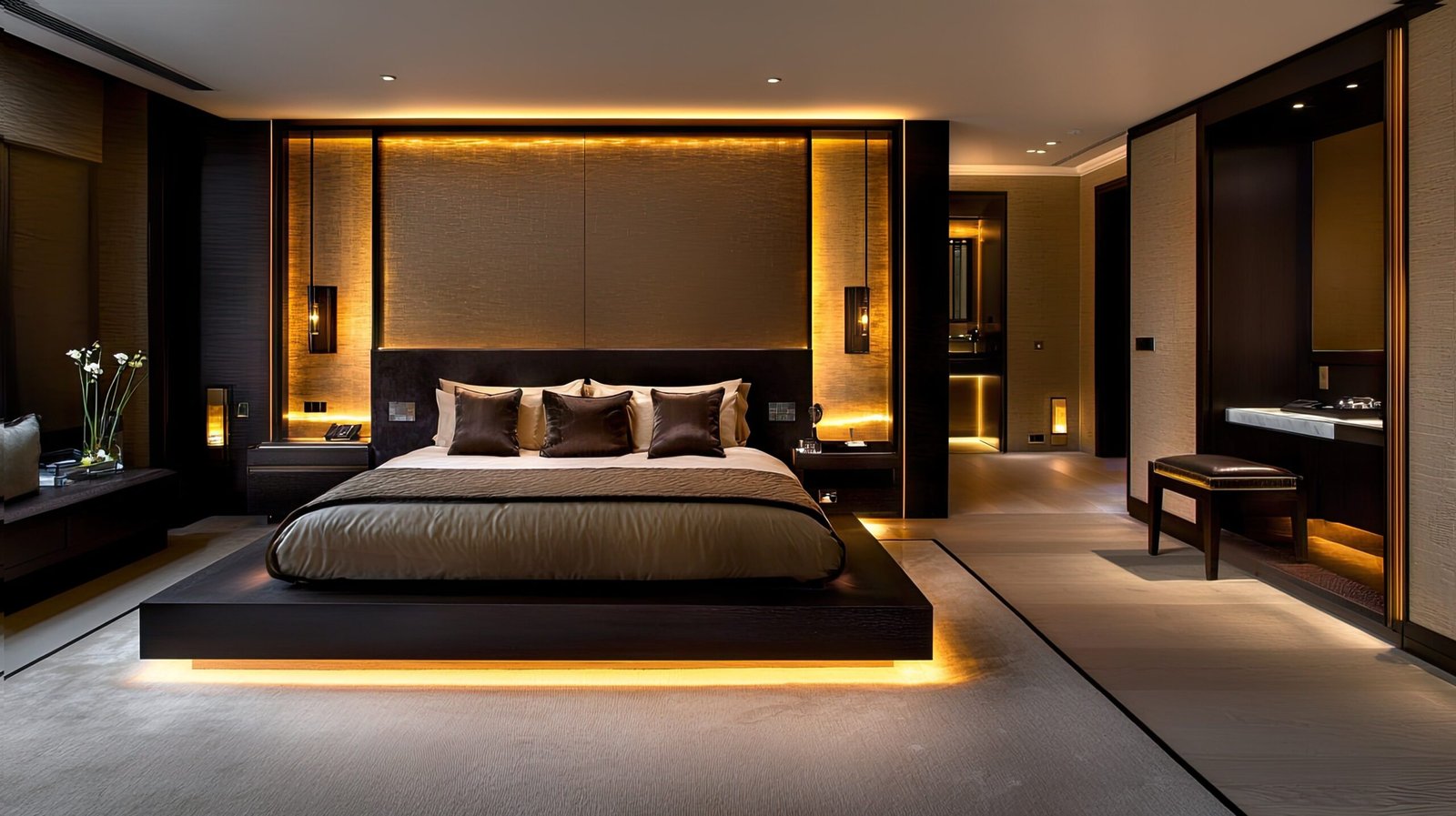
We sometimes speak about square footage as if homes exist only in two dimensions. The concept of cubic space is often forgotten, and so is the rule of vertical lighting, which, as a result, pulls the ceiling down like a low-hanging lid.
Now, how does that happen? Most fixtures cast a burst of light downward, concentrating illumination at table or desk height. Ceilings are often left dim, and that’s why they seem visually lower- the last thing you want in an already cramped room.
There is a huge difference between a room lit by a single flat, flush-mount fixture, and one that includes at least one source of “uplight,” such as a wall sconce or floor lamp. An upward wash of light brightens the upper walls + ceiling, opening up the room’s apparent volume. But with a dull, shadowy ceiling, the space is more like a box than a volume of air.
❌ Overlooking Light Switch Placement
Developing a proper lighting and electrical plan in advance helps put this essential design aspect at the forefront, rather than leaving it as an afterthought. It is extremely important to consider where your light switches are located in the room and which fixtures they are connected to.
There is nothing worse than switch plates crammed right up against the trim, or placed outside the room because of improper planning.
❌ Viewing Lighting as Purely Functional
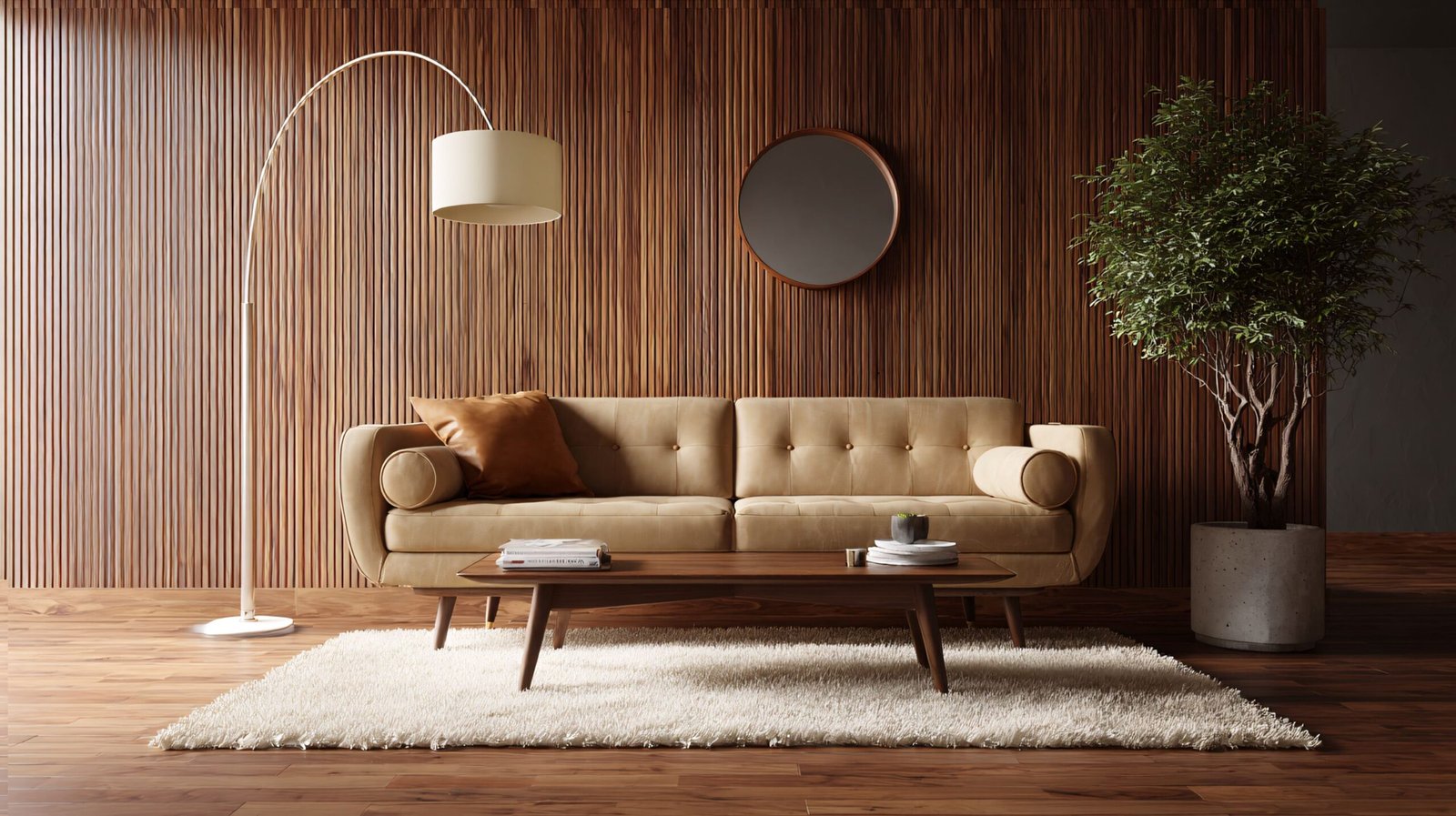
Lighting is the jewelry of a room, so there’s absolutely no reason why you shouldn’t show off your style. Sculptural table lamps, wall sconces, and floor lamps add shape and personality like no other. You would always want to invest in lighting that looks just as stunning when off as when on 😉
Let Your Rooms Breathe with Light
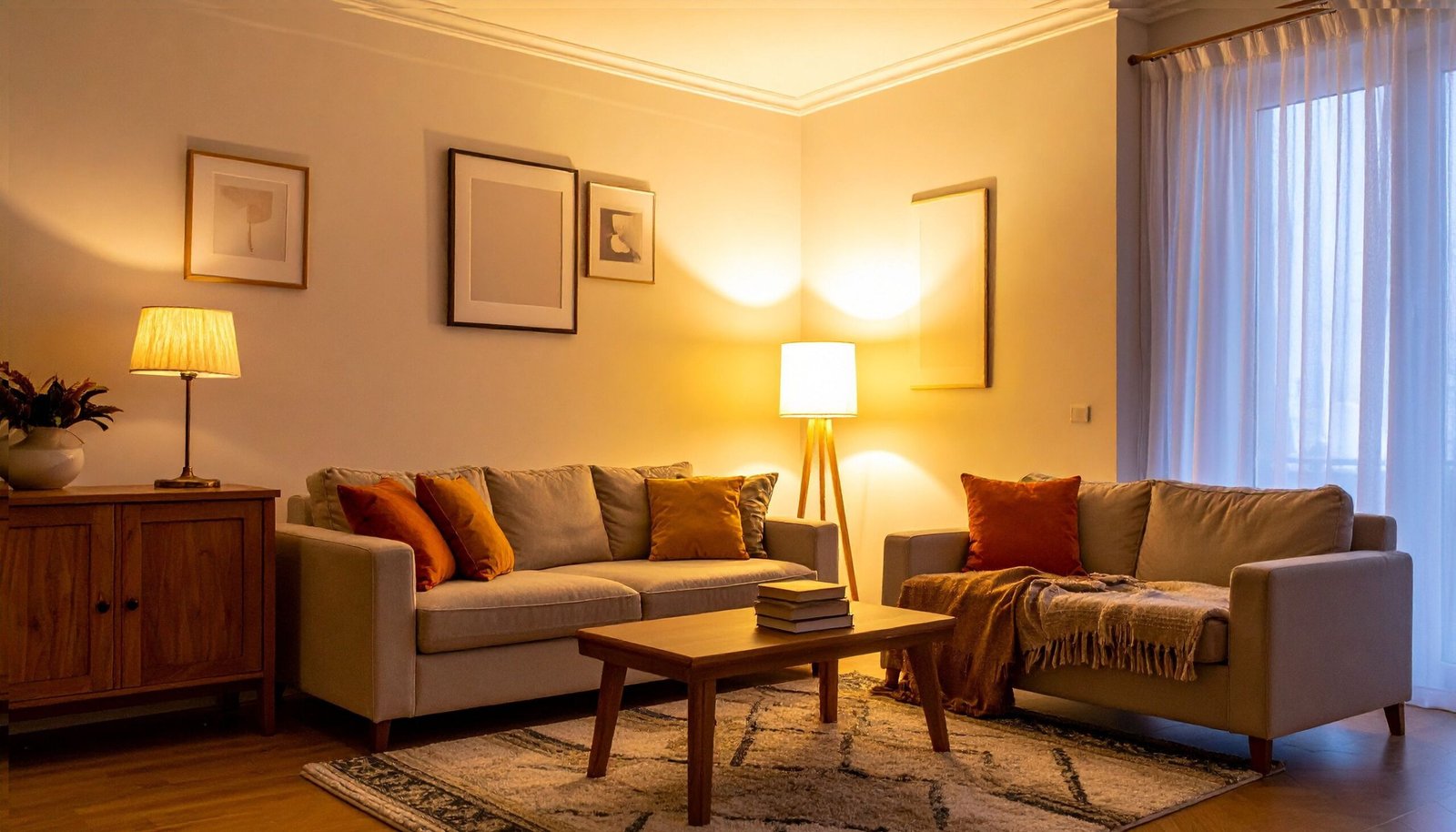
None of this means you have to embark on a full-fledged electrical renovation. Often, the changes that have the biggest impact are the simplest, and are much cheaper than a full remodel.
Start by standing in each room, and give yourself a chance to notice. Catch the loops, then think in layers. If planning feels overwhelming, using our simple Lighting Calculator can turn those observations into a clear, workable plan. Most importantly, add fixtures before replacing big light sources… a small table lamp on an entry console, a slim floor lamp in a dark corner, a pair of bedside lamps instead of a single overhead.
When shopping for bulbs, imagine you’re picking the “mood” of your home. Also, don’t forget to pay attention to the quiet, physical cues in your body, like does the hallway seem a little longer when you install a sconce there, or do your shoulders drop when you turn that lamp on?
In the end, lighting is less about what you install and more about what the room becomes.